



The Pink October campaign – prevention of breast cancer – highlights the importance of an early and effective diagnosis for all audiences. This type of cancer affects 2.2 million women worldwide and, in Brazil, it is responsible for approximately 18 thousand deaths per year. Did you know that IMP has a team of researchers looking for new ways to help diagnose and treat breast cancer patients? The group at the Center for Studies and Research (NEP) has been working to find a more accurate and less invasive diagnosis.
 One of the proposals developed at the Laboratory of Translational Research in Oncology at NEP is carried out by doctoral student Thayse Batista, in collaboration with Fiocruz Minas. Thayse is studying the profile of tumor microvesicles present in the blood of breast cancer patients treated at Hospital Luxembourg. These microvesicles are released by the tumor and immune system cells and are present in the blood. According to Thayse, the goal is to develop a diagnosis using microvesicles, which are structures released by the tumor since its formation, when it is still difficult to detect by imaging, making this method less invasive and efficient in detecting the disease and monitoring the treatment .
“The microvesicles carry several characteristic molecules of the tumor, which allows the identification of its origin and communication with other organs. One of the functions of these microvesicles is to allow the tumor to grow and develop in other organs, causing metastasis, as its release reaches other organs through the blood and transforms it into a favorable environment for tumor growth”; explains.
Knowing in depth how the tumor relates to the body is a powerful tool in the fight against breast cancer and providing this type of personalized treatment for SUS patients is an advance in quality health care for all. .
The work developed by Thayse has the collaboration of the clinical team of mastology and oncology, the NEP researchers and the patients who accept to participate in the Center’s research.
Thayse highlights that working closely with breast cancer patients has brought a new perspective to my work. “Meeting these women who face this disease, often with a smile on their faces, inspires me every day to seek more diligently for a service that will make this journey more peaceful and effective.”
*Text written by the Study and Research Center (NEP) team

 “The Reintegrar Project is very important to Instituto Mário Penna, as it brings an economically and environmentally sustainable vision. In the lot that is in front of the institution, it is possible to reuse the waste generated, transforming it into fertilizer and, from that, generating a high quality production and an entirely organic product for our patients”; explains João Augusto Viana Ferreira, technical responsible for the Environment sector.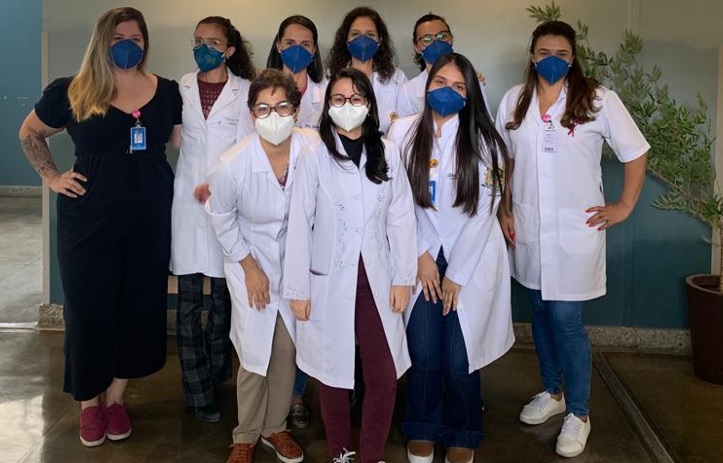
 IMP’s Palliative Care Service works in a multidisciplinary way, with the work of doctors, nurses, social workers, psychologists and physiotherapists. Specialists from different areas work together to ensure that patients with serious and life-threatening illnesses are treated comprehensively in the various dimensions of suffering (physical, psychological, social and spiritual), always aiming at quality of life and respecting people’s values answered.
 Last Monday afternoon, October 25th, Mário Penna’s team was at Precon, in Pedro Leopoldo, for a chat with the company’s employees. Eliane Fraga, a patient from Entrelaçadas (the IMP’s support group for women with breast cancer) told a little about her fight against the disease, talked about the difficulties of recovery, and emphasized the importance of prevention and the annual mammography.
 The president of Instituto Mário Penna, Marco Antônio Viana Leite, along with 11 breast cancer patients (As Entrelaçadas, a support group formed by women warriors who share their experiences), visited Atlético’s future “home”, where they were welcomed by mascot Galo Doido and by members of the board of the team and the Galo Institute.