
[wpml_language_switcher type="widget" flags=1 native=0 translated=0][/wpml_language_switcher] Proteção de Dados (LGPD) Resultados de Exames
Mario Penna

DOE AGORA
  • O que fazemos
    • Associações Voluntárias
    • Convênios
    • Comitê de Ética em Pesquisa
    • Direção
    • História
    • Missão, visão e valores
    • Qualidade e segurança
    • Residência e Especialização
    • Unidades
  • Notícias
  • Transparência
    • Compras e Licitações
      • Regulamento
      • Manual do Fornecedor
      • Cadastro SEI Externo
      • Aquisições
        • Hospital Luxemburgo
        • Hospital Regional de Teófilo Otoni
        • Hospital Raja
    • Nossos Dados
      • Produção
      • Capacidade Instalada
      • Composição da Equipe Assistencial
    • Compliance
      • Programa de Ética e Compliance
      • Código de Conduta
      • Vídeos
    • Demonstrativos Financeiros
    • Editais e Documentos
    • Troco Solidário
    • Relatório de Igualdade Salarial
    • Relatórios e Planejamento
    • Revistas
    • Instrumentos de Repasse / Emendas
  • Fale Conosco
    • Trabalhe Conosco
    • Ouvidoria
    • Canal de Denúncias
  • Como Ajudar
  • —-
  • Hospital Luxemburgo
  • Portal do Câncer
  • Casa de Apoio Beatriz Ferraz
  • Instituto de Ensino, Pesquisa e Inovação
DOE AGORA

HOSPITAL LUXEMBURGO

NEXS I NÚCLEO DE EXCELÊNCIA EM SAÚDE

CASA DE APOIO BEATRIZ FERRAZ

NÚCLEO DE ENSINO, PESQUISA E INOVAÇÃO

Notícias de: Teaching and Research Center (NEP)

5nov2021
Autor Carolina Farah Categorias General News, Teaching and Research Center (NEP)

NEP and colorectal cancer: prevention is still the best medicine

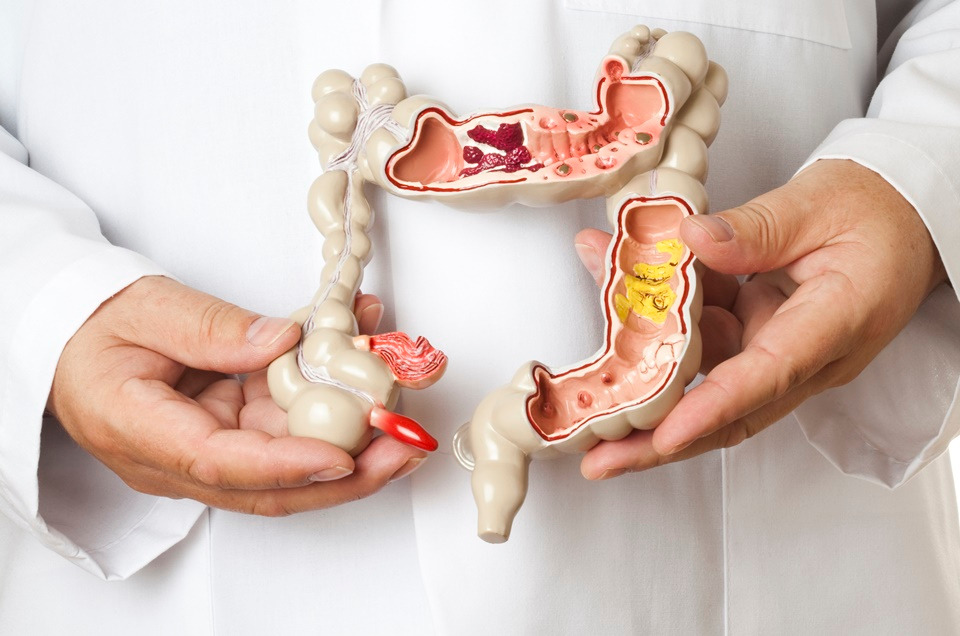
Colorectal cancer, despite being the second most common type of cancer in men and women (apart from non-melanoma skin cancer), is also one of the most preventable. That’s because he doesn’t suddenly appear. This type of cancer originates from polyps (abnormal cell growth) located in the large intestine in the colon, rectum and anus regions. They usually don’t cause symptoms and can take between 10 and 15 years to develop into cancer. But if detected during a colonoscopy (a test that captures real-time images of the intestine) they can be removed before cancer occurs.

However, only 40% of colorectal cancer cases are detected at an early stage. The vast majority are detected in advanced stages, when symptoms are more evident and existing treatments less effective.

But if there are ways to diagnose it early, why is it still happening? According to the doctor. Carolina Melo, a researcher at the NEP’s Translational Research Laboratory, one of the main reasons is that there is still a lot of prejudice against colonoscopy, as it is an invasive technique, which requires a preparation (cleaning) of the colon considered unpleasant because it includes the use of laxatives and large water intake.

Routine colonoscopy should be performed in the population, in general, from 50 years of age, with regular intervals that can go from 3 to 5 years, according to medical advice.

“If everyone was aware of the suffering that can be avoided with the early diagnosis of colorectal cancer, there might not be room for this type of prejudice. There are other ways to screen for signs of colorectal cancer, but colonoscopy is the only one that can prevent it from starting by removing the polyps”; emphasizes Dr. Carolina.

Some people have a higher risk of getting this disease. About 3% of cases (1 in 30) of colorectal cancer are caused by an inherited syndrome called Lynch Syndrome. In this syndrome, mutations in genes that help repair DNA damage can increase by up to 50% a person’s risk of developing colorectal cancer, usually relatively young. Therefore, knowing the family history is very important in these cases.

In addition, for those who have problems with intestinal inflammation, such as Crohn’s disease and ulcerative colitis, or have a first-degree relative who has already had some type of bowel cancer, this test should start from 40 years of age onwards. .

The good news is that researchers are working on the search for biomarkers, such as specific cells, molecules or genes, that allow the early diagnosis of cancer in a less invasive and more assertive way. Another advance in colorectal cancer treatment is the recent publication of promising results from the application of a protective vaccine against hereditary colorectal cancer in mice.

Want to learn more about scientific advances in the diagnosis and treatment of colorectal cancer? In the next edition, Dr. Carolina continues talking about this topic on our social networks and on Infoco.


  • Text written by Dr. Carolina Melo, PhD in human genetics. She has worked for over 10 years in oncology research and is currently part of the NEP research team.

5nov2021
Autor Carolina Farah Categorias General News, Teaching and Research Center (NEP)

NEP: The Hope of a Vaccine to Treat Colorectal Cancer

In the previous text we talked about the importance of early diagnosis as one of the main allies for the cure of colorectal cancer. Now let’s talk about a great advance in science in the search for more efficient and less aggressive treatments than conventional chemotherapy and radiotherapy, used in the vast majority of cases.

Recently, a group of researchers from Germany published promising results from the application of a protective vaccine against hereditary colorectal cancer in mice. This type of colorectal cancer accounts for about 3% of cases (1 in 30) and is caused by an inherited syndrome called Lynch Syndrome.

In this study, scientists at the University Hospital of Heidelberg, Germany, identified that many patients with this syndrome had identical mutations in the DNA of the cancer cell. “The most interesting thing is that four of these mutations had the ability to make the body’s own defense cells attack the tumor”; account Dr. Carolina Melo, researcher at the Translational Research Laboratory of the Study and Research Nucleus (NEP).

They then developed a vaccine with proteins containing these mutations to be tested in mice. According to Dr. Carolina, it’s as if the vaccine showed the mouse’s defense cells which defective cells must be eliminated and so they attack the cancer as soon as it appears.

“The vaccinated mice survived longer and had a significantly smaller tumor than the unvaccinated ones. It was the first time that tests in a living being showed that it is possible to delay the development of hereditary colorectal cancer with a vaccine developed from mutations found in the cancer cell”; emphasizes the researcher.

Clinical trials demonstrating the safety and immunological efficacy of this vaccination in humans have already been successfully completed in a hospital in Frankfurt, Germany, and in the coming years we will know if it will be able to prevent tumors and prolong patient survival.

Science and medicine are doing their part in finding more efficient ways to treat and prevent colorectal cancer. Make you yours too! Beware! Make your routine exams according to medical advice, have healthy eating habits, exercise. Take care of yourself!

  • Text written by Dr. Carolina Melo, PhD in human genetics, who has been working for over 10 years in oncology research and is currently part of the NEP research team.
5nov2021
Autor Carolina Farah Categorias General News, Teaching and Research Center (NEP)

NEP: Meet an Ongoing Breast Cancer Study

The Pink October campaign – prevention of breast cancer – highlights the importance of an early and effective diagnosis for all audiences. This type of cancer affects 2.2 million women worldwide and, in Brazil, it is responsible for approximately 18 thousand deaths per year. Did you know that IMP has a team of researchers looking for new ways to help diagnose and treat breast cancer patients? The group at the Center for Studies and Research (NEP) has been working to find a more accurate and less invasive diagnosis.

One of the proposals developed at the Laboratory of Translational Research in Oncology at NEP is carried out by doctoral student Thayse Batista, in collaboration with Fiocruz Minas. Thayse is studying the profile of tumor microvesicles present in the blood of breast cancer patients treated at Hospital Luxembourg. These microvesicles are released by the tumor and immune system cells and are present in the blood. According to Thayse, the goal is to develop a diagnosis using microvesicles, which are structures released by the tumor since its formation, when it is still difficult to detect by imaging, making this method less invasive and efficient in detecting the disease and monitoring the treatment .
“The microvesicles carry several characteristic molecules of the tumor, which allows the identification of its origin and communication with other organs. One of the functions of these microvesicles is to allow the tumor to grow and develop in other organs, causing metastasis, as its release reaches other organs through the blood and transforms it into a favorable environment for tumor growth”; explains.

Knowing in depth how the tumor relates to the body is a powerful tool in the fight against breast cancer and providing this type of personalized treatment for SUS patients is an advance in quality health care for all. .

The work developed by Thayse has the collaboration of the clinical team of mastology and oncology, the NEP researchers and the patients who accept to participate in the Center’s research.

Thayse highlights that working closely with breast cancer patients has brought a new perspective to my work. “Meeting these women who face this disease, often with a smile on their faces, inspires me every day to seek more diligently for a service that will make this journey more peaceful and effective.”

*Text written by the Study and Research Center (NEP) team

5nov2021
Autor Carolina Farah Categorias General News, Teaching and Research Center (NEP)

NEP team conducts studies for new breast cancer diagnoses

The Instituto Mário Penna’s Pink October campaign also has important allies to help fight breast cancer. The Teaching and Research Nucleus (NEP) has a team of researchers who are looking for new ways to assist in the diagnosis and treatment of patients, in addition to the imaging exams currently used. This group has been working to find a more accurate diagnosis.

One of the researches developed is part of Thayse Batista’s doctoral project, supervised by researchers Dr. Andréa Teixeira, from the René Rachou Research Institute – FioCruz Minas, and Dr. Letícia Braga, Coordinator of the Oncology Translational Research Laboratory at Instituto Mário Penna. The research assesses the profile of tumor microvesicles present in the blood of patients with breast cancer treated at Hospital Luxemburgo.

According to doctoral student Thayse, the goal is to develop a diagnosis using microvesicles, which are structures released by the tumor since its formation, when detection by imaging is still difficult, making this method more assertive and efficient in detecting the disease and in monitoring of the treatment.

She also explains that the microvesicles carry several characteristic molecules of the tumor, which allow the identification of its origin and communication with other organs. One of the functions of these microvesicles is to allow the tumor to grow and develop in other organs, causing metastasis, transforming it into a favorable environment for tumor growth.

“Our research results show that breast cancer patients have a higher number of microvesicles in their blood when compared to healthy donors. In addition, the profile of these vesicles is different on some occasions, as in the case of patients with metastasis who have a high number of T lymphocyte microvesicles, a cell type already known to be involved in the progression and response to cancer treatment”; explains Dr. Leticia.

The work developed has the collaboration of the clinical team of mastology and oncology, the NEP researchers and the patients who accept to participate. “This has made it possible to go even further in the search for personalized and quality treatment for everyone, following the motto of this year’s campaign at IMP. Knowing in depth how the tumor relates to the body is a powerful tool in the fight against breast cancer and providing this type of personalized treatment for SUS patients is an advance in quality health care for all. ”.

Página anterior 1 2 3

Categorias

  • 50 anos Instituto Mário Penna
  • 50 years IMP
  • Agenda Mário Penna
  • Assistencial
  • BH
  • BH
  • Blog Portal do Câncer
  • Campanhas de Prevenção
  • Cancer Treatments
  • Casa de Apoio Beatriz Ferraz
  • Cofinho do Bem
  • colaboradores
  • Correios
  • Corrida da Esperança
  • Covid
  • Cuidados Paliativos
  • Curso de Gestão
  • Cursos
  • Dezembro Laranja
  • Dia Internacional da Mulher
  • Diretoria
  • Droga Clara
  • Ensino, Pesquisa e Inovação
  • Entrevista
  • Espaço Mulher
  • Estrelas Mário Penna
  • Fundo do Idoso
  • General News
  • Heróis Mário Penna
  • Histórias de pacientes
  • Histórias de pacientes,Hospital Luxemburgo,Notícias Gerais
  • Histórias de pacientes,Hospital Luxemburgo,Notícias Gerais,Oncologia
  • Hospital Luxemburgo
  • Hospital Luxemburgo,Notícias Gerais,Oncologia
  • Hospital Luxemburgo,Oncologia
  • Hospital Mário Penna
  • Hospital Regional de Teófilo Otoni
  • Humanização
  • Imposto de Renda
  • Infofarma
  • Instituto Mário Penna
  • Janeiro Branco
  • Julho Verde
  • Linfomas
  • Lista do Bem
  • Lojas Redes
  • Luxembourg Hospital
  • Março Lilás
  • Mario Penna de Todos
  • Maternidade Real
  • Minas na Mesa
  • Momento do Bem
  • Musica no Hospital
  • Não categorizado
  • NEXS
  • Notícias Gerais
  • Notícias Gerais, Oncologia
  • Nova Marca
  • Novembro Azul
  • Novo Hospital Luxemburgo
  • Núcleo de Ensino e Pesquisa (NEP
  • Núcleo de Especialidades Oncológicas (NEO
  • Outubro Rosa
  • Parceiros
  • Partners
  • Pastoral da Saúde
  • Pink October
  • Projeto Reintegrar
  • Reunião Multidisciplinar
  • Teaching and Research Center (NEP
  • Todos Juntos Contra o Câncer
  • Tratamento Oncológico
  • Tratamentos Contra o Câncer
  • Verdemar

Assine nossa Newsletter

Fique por dentro de tudo que acontece no Instituto Mário Penna

0800 039 1441

DOAÇÕES POR TELEFONE

SALA DE IMPRENSA

ACESSE POR AQUI

Conecte-se com o Instituto Mario Penna

  • facebook
  • instagram
  • youtube
  • linkedin
Copyright © 2020 Mario Penna. Todos os direitos reservados.CNPJ: 17.513.235/0001-80
Olá, como podemos ajudar?

Damos valor à sua privacidade

Nós e os nossos parceiros armazenamos ou acedemos a informações dos dispositivos, tais como cookies, e processamos dados pessoais, tais como identificadores exclusivos e informações padrão enviadas pelos dispositivos, para as finalidades descritas abaixo. Poderá clicar para consentir o processamento por nossa parte e pela parte dos nossos parceiros para tais finalidades. Em alternativa, poderá clicar para recusar o consentimento, ou aceder a informações mais pormenorizadas e alterar as suas preferências antes de dar consentimento. As suas preferências serão aplicadas apenas a este website.

Cookies estritamente necessários

Estes cookies são necessários para que o website funcione e não podem ser desligados nos nossos sistemas. Normalmente, eles só são configurados em resposta a ações levadas a cabo por si e que correspondem a uma solicitação de serviços, tais como definir as suas preferências de privacidade, iniciar sessão ou preencher formulários. Pode configurar o seu navegador para bloquear ou alertá-lo(a) sobre esses cookies, mas algumas partes do website não funcionarão. Estes cookies não armazenam qualquer informação pessoal identificável.

Cookies de desempenho

Estes cookies permitem-nos contar visitas e fontes de tráfego, para que possamos medir e melhorar o desempenho do nosso website. Eles ajudam-nos a saber quais são as páginas mais e menos populares e a ver como os visitantes se movimentam pelo website. Todas as informações recolhidas por estes cookies são agregadas e, por conseguinte, anónimas. Se não permitir estes cookies, não saberemos quando visitou o nosso site.

Cookies de funcionalidade

Estes cookies permitem que o site forneça uma funcionalidade e personalização melhoradas. Podem ser estabelecidos por nós ou por fornecedores externos cujos serviços adicionámos às nossas páginas. Se não permitir estes cookies algumas destas funcionalidades, ou mesmo todas, podem não atuar corretamente.

Cookies de publicidade

Estes cookies podem ser estabelecidos através do nosso site pelos nossos parceiros de publicidade. Podem ser usados por essas empresas para construir um perfil sobre os seus interesses e mostrar-lhe anúncios relevantes em outros websites. Eles não armazenam diretamente informações pessoais, mas são baseados na identificação exclusiva do seu navegador e dispositivo de internet. Se não permitir estes cookies, terá menos publicidade direcionada.

Visite as nossas páginas de Políticas de privacidade e Termos e condições.

Importante: Este site faz uso de cookies que podem conter informações de rastreamento sobre os visitantes.

[cd_calculate_form]

[cd_calculate_form]