


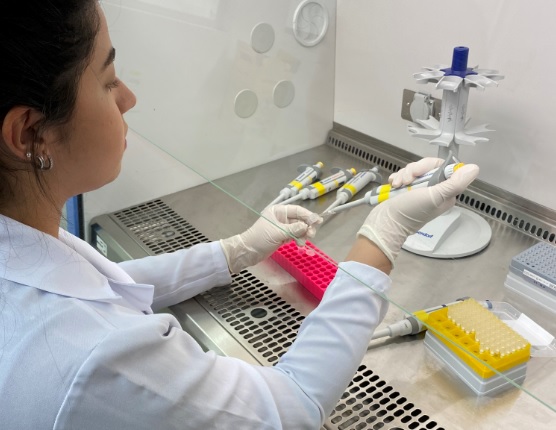
The Ezequiel Dias Foundation (Funed), through its Molecular Biology Service (SBM), has just signed a partnership with the Mário Penna Institute, through the Teaching and Research Nucleus (NEP). The institution is philanthropic, a reference in cancer prevention, diagnosis, treatment, teaching and research in Minas Gerais.
The objective of the cooperation is to establish a partnership for research, development and innovation, through the Oncology Biomarkers Research Network. According to Luciana Maria Silva, Funed researcher responsible for the work, the partnership is strategic to provide advances in the understanding of the carcinogenesis of human tumors. “Oncology research can be of the basic or translational type, but together they can promote the health of patients diagnosed with the disease, with the objective of advancing important discoveries that go from the bench to the bedside “, claims.
Funed participates as an Institute of Science and Technology (ICT) whose purpose is to carry out research for scientific and technological development in the field of public health, in research and production of medicines, as well as in laboratory analyzes in the field of harm to collective health . The expectation is that the cooperation will provide advances in several researches, but particularly in the research that is underway on ovarian cancer. “This process can contribute to the development of new drugs, diagnostic kits and other products for human health”, exemplifies Luciana.
The Mário Penna Institute – named after the doctor who became a pioneer in cancer treatment in Minas Gerais – has reference hospitals in cancer treatment, such as Hospital Mário Penna and Hospital Luxemburgo, in addition to the Beatriz Ferraz Support House, which welcomes patients from the countryside undergoing treatment at the Institute’s hospitals, the Center for Oncology Specialties (NEO) and a Center for Teaching and Research to discover treatments, diagnoses and a better understanding of cancer.
Currently, Instituto Mário Penna is responsible for attending 70% of new cancer cases in Belo Horizonte and its metropolitan region, and more than 20% of new cancer cases in the entire State of Minas Gerais. Defined as a fundamental part of the Institute’s strategic planning, the research activity developed through its Teaching and Research Center involves a multidisciplinary professional body, including members of the clinical staff who work in the investigation and production of data, generating knowledge and advances in the field of oncology.
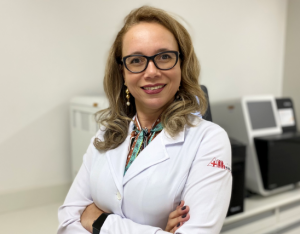 The Translational Research Laboratory of the IMP’s Teaching and Research Nucleus is headed by researcher Letícia da Conceição Braga, Luciana Silva’s research partner, and carried out her doctoral experiments at Funed’s SBM. The two researchers are responsible for bringing innovation in cancer biotechnology to Minas Gerais, through the creation of the startup OncoTag, which was born at the Foundation in 2014, and which has in its development portfolio a molecular test for patients with ovarian cancer. According to Luciana, the pair has experience, complicity and commitment so that the two institutions can help improve the treatment of cancer patients through their research.
Relevance – Cancer is the second leading cause of death worldwide. According to the World Health Organization (WHO), in 2018 there were 10 million deaths due to cancer in the world. “Cancer continues to grow globally, exerting tremendous physical, emotional and financial strain on people, families, communities and healthcare systems. Many of them, from middle-income countries like Brazil, are less prepared to manage this burden and many patients do not have access to adequate diagnosis and treatment”, recalls Luciana Silva.
Dr. Letícia Braga adds that this partnership with Funed means the joining of efforts of researchers and institutions working to strengthen the Unified Health System (SUS) can make a difference in this scenario and promote health through research and innovation for patients in the SUS.


 Classified by the Ministry of Health as a High Complexity Oncology Care Center (CACON), in 2020 the Institute also carried out 272 thousand radiotherapy applications, 34 thousand chemotherapy sessions, 55 bone marrow transplants and almost 11 thousand surgeries. In addition, it is at the forefront in the fight against Covid-19 and, for this, infirmary beds and other new ICU beds were created, aimed at treating patients with the disease.
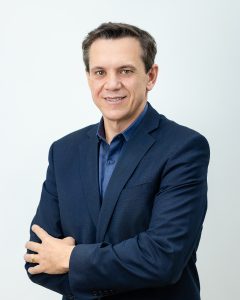
 According to Dr. Ellias Lima, oncologist and Coordinator of COREME, the objective is to bring the clinical staff together, promote medical residency, plan treatments in a multidisciplinary way, update and promote knowledge. The meeting is online on a remote digital platform and involves resident physicians, assistant physicians and preceptors. They take place once a month, with educational support from the pharmaceutical industry.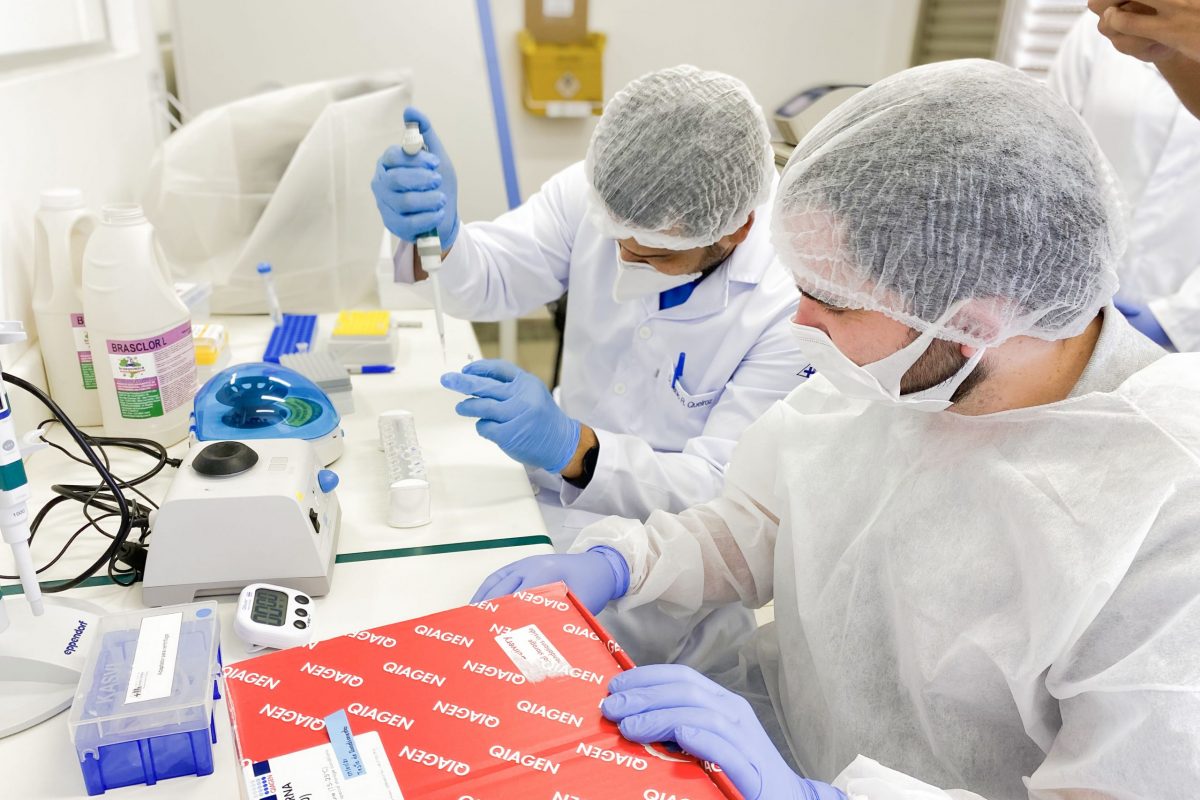
 When our cells are going to multiply, whether to repair damaged tissue or to replace other cells, this genetic code needs to duplicate itself. This is important so that each new cell has the same genetic information as the one that originated it. During this duplication step, small errors can happen in the genetic code and they are called mutations.